
Curating a Third Space in the Classroom
The place between the 'real world' and a student's lived experience

Welcome back to the fifth of twelve installments of the actions, approaches, and stories from Learning Environment: Inspirational Actions, Approaches, and Stories from the Science Classroom.
In my last post, we looked at the “3 Pillars” of pre-trip preparation, that is, how content, context, and skills (the what, the why, and the how) can transform a field trip into fieldwork.
But once we are in the field, or even when we bring the outside world into our classroom, a new challenge arises: How do we bridge the gap between the canon and a student who feels like what is being taught isn’t for them?
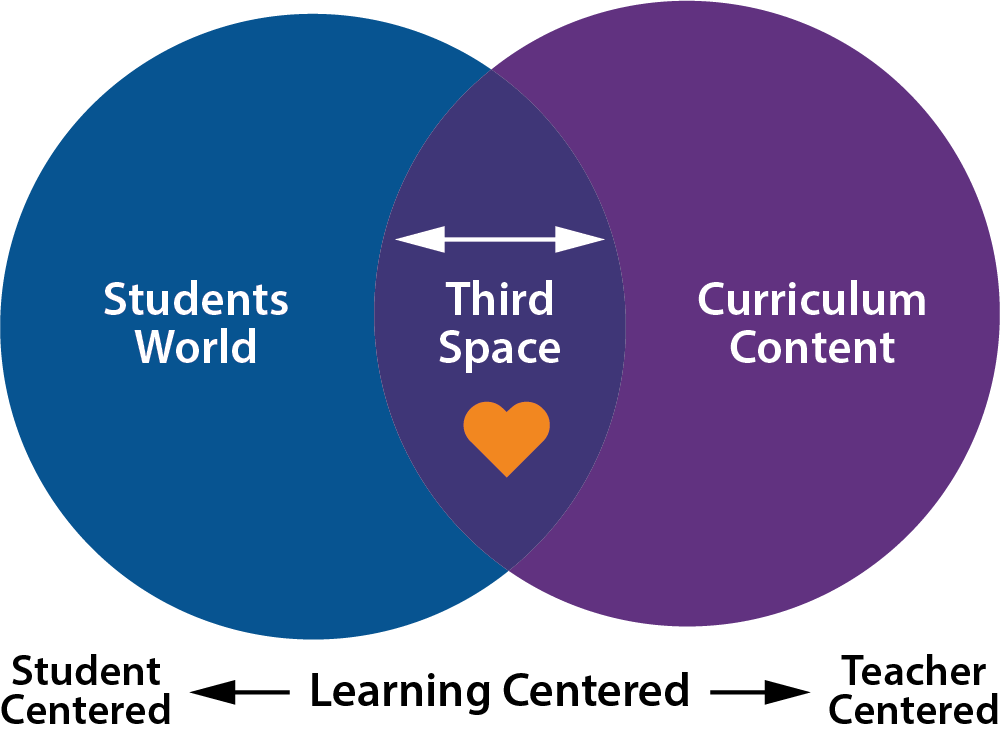
The third space is not just a physical location, but also a social one. It’s a place where the culture of the professional meets the lived experience of the student.
One way to solve this is through the intentional creation of a third space—an intermediary space between the professional world (or the classroom) and our students’ home and lived experiences.
The third space is not just a physical location, but also a social one. It’s a place where the culture of the professional meets the lived experience of the student. And when these constructs (real and imagined) intertwine there is potential to create something new.
Indeed…
A shared appreciation of cultures becomes possible.
New ways of being (and doing) can emerge.
A Reading from Learning Environment
The BioBus community scientists welcomed students inside the mobile lab with smiles that warmed the frost from their fingertips. Looking around the bus’s interior, which had been entirely gutted of passenger seats, students saw a series of stereomicroscope stations. Each scope... was outfitted with high-definition cameras and connected to a digital screen. This unique and intentional design created a multimodal learning experience for students that encouraged them to discover, explore, and pursue [our topic of study] more deeply.
— Learning Environment, pages 135–136
Action and Approach: The Third Space
When applying a third space lens to the education, the first space is the teacher’s domain (the classroom and content), while the student’s home life is the second space. Whereas the third space is the intersection where these two disparate places or cultures meet.
While research has shown that third spaces can be constructed in the classroom, I have often felt (and found in my own research) that leaving the classroom behind and bringing students into their local community for learning can more readily facilitate their creation.
The benefit of stepping outside is an increased likelihood of understanding and adoption of various practices and ideas by all parties in the first and second spaces. This, in turn, can impact a student’s connection to and engagement with a topic of study, or even with the concept of school itself.
Without going too much further down the theoretical rabbit hole surrounding the third space in education, let me explain.
When I was teaching my students about microscopy, I would invite the BioBus, a mobile science lab, to my school. During a BioBus visit, which parked directly outside of our school, students would visit and interact with practicing scientists during their normal school period. Using research-grade microscopes, running small experiments, and asking lots and lots of questions.
In this third space environment the classroom hierarchy would evaporate.
BioBus community scientists didn’t act like all-knowing experts and authority figures, but as partners in inquiry.
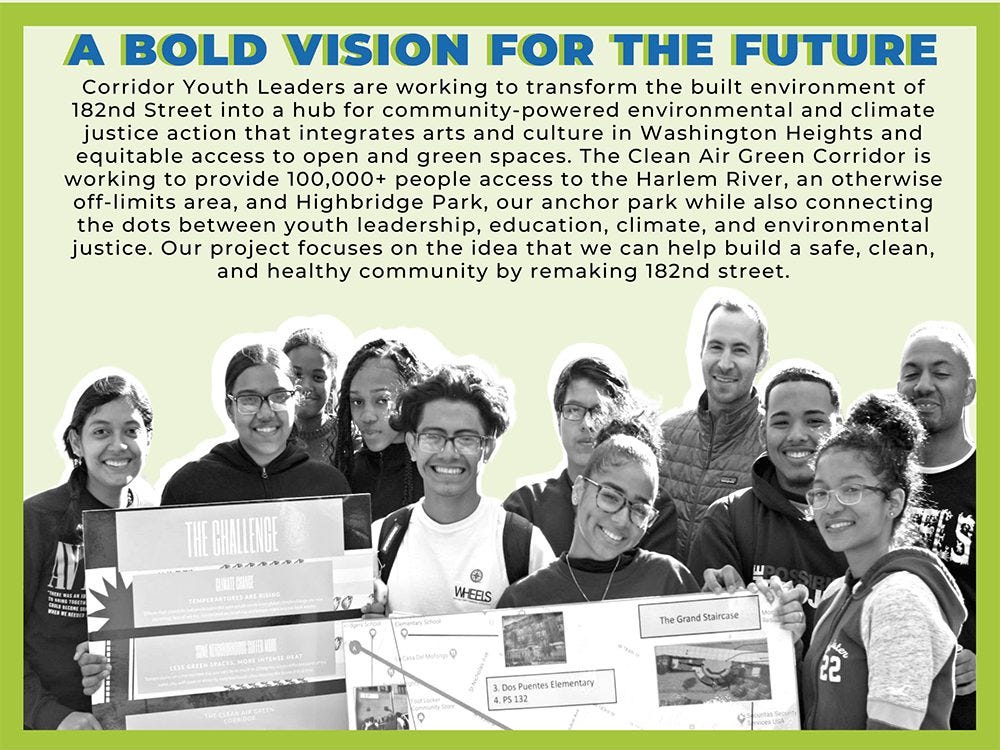
As a result, students were oftentimes more willing to engage in the discovery process on the mobile lab than when back in the classroom. And while this is just one example of what the third space can look like when students are connected to professionals while also learning in their own community, it is something I saw play out over and over again, leading to beautifully unexpected but much welcome community advocacy outcomes (see below).
Start Small: Inviting Experts, creating a third space
You don’t need a BioBus to create a third space. Start small with an invitation for an expert to visit your classroom:
Send an Email: Don’t be daunted by the idea of needing to create a fully established partnership. Send one email to an industry insider or community organization. Invite them to visit your class for a period. You may be surprised at the willingness of experts (even famous ones) to visit your school.
Expert visit: Ask an expert visitor not just to talk but to perform or demonstrate a specific task they do in their professional life (e.g., conduct an experiment, write a poem, analyze a report, or create a media piece). Demonstrate to students what professional craftsmanship looks like and ask them to reflect on how their current work products do or do not live up to the expert’s level.
Student MCs: Tap your students to host the visit. Let them introduce the expert and moderate the Q&A. This empowers them as leaders while also helping to fuel a third space learning environment.
Ask for what you need: If you teach at a Title I school or funding is an issue, don’t be afraid to ask for a discount or a pro bono visit. Many professionals or organizations are eager to be impact multipliers for the next generation.
The Impact: Creating a third space for students signals to them that what they are learning is relevant to the world outside the classroom. It turns content and skills from an abstract textbook reading or writing assignment into a part of their lived reality. Third spaces also act as two-way streets, benefiting not just students, but all involved.
Join the Learning Environment Movement
Does your classroom, school, curriculum, or programming feel like an isolated island, disconnected from the professional and cultural world outside and students’ lived reality?
At Fox EduConsulting, I partner with schools and organizations to help build third spaces by bridging archipelagos— creating intentional networks of professional opportunity and community connection that benefit both students and practitioners.
If you’re ready to craft learning environments that are actively working with partners, let’s connect.
Together, we can Dream, Collaborate, and Create the third spaces you and your students envision.
Coming Up Next: In post 6, “Mapping the Invisible,” we’ll explore how digital tools like ArcGIS StoryMaps can help students document and share the environmental data of their own neighborhoods.
Dr. Jared Fox, is an education expert and the founder of Fox EduConsulting. Through his consulting practice, Jared helps schools and organizations craft authentic, engaging, and comprehensive learning environments - with a specialty working at the intersection of science, the environment, and social justice.
I just had a trio of women come to my classes to tell their family's Holocaust survival stories. Whew! It was a heavy 3rd space indeed.
If you are a history teacher, check with your local Holocaust museum. They might have a bureau of speakers who will come out for free.
Brilliant perspective!!! We often forget how complicated it is to be a child in such a modern world. Third space for learning is a magical intersection of partnership and opportunities for creativity and fun. So many great ideas. Please run education for the world!